What does excavation cost in Augusta?
Excavation is priced from the lot: how much dirt moves, how far it goes, and what is in the way. There is no honest per-yard price that works on every site, and a quote given without seeing the ground is a guess. We give you a free scope of work estimate after a site walk, with the scope written out so you can compare it.
This page lists what changes the number, shows you how to size your own job, and says what a good estimate includes. We do not post prices here, because a posted price either leaves out the hard parts or pads the easy ones.
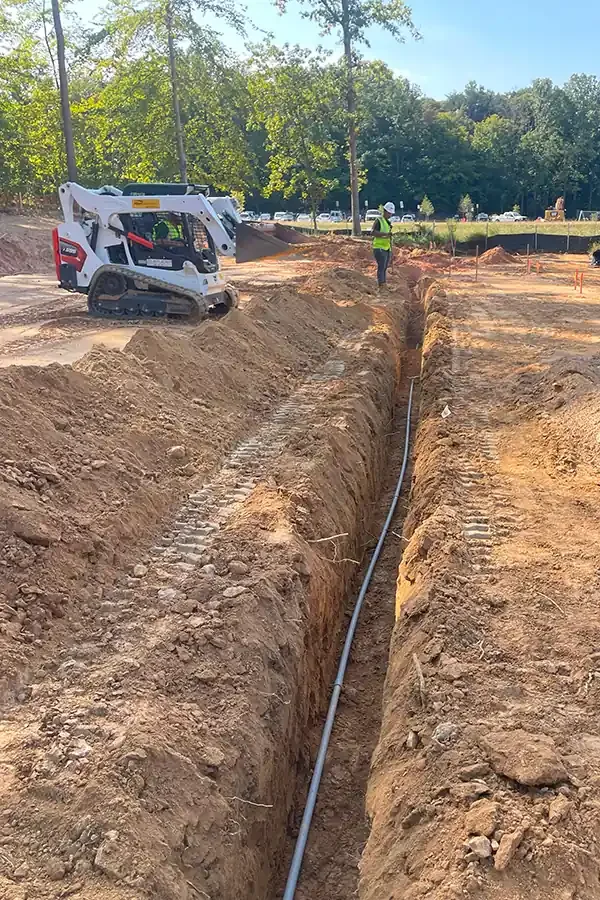
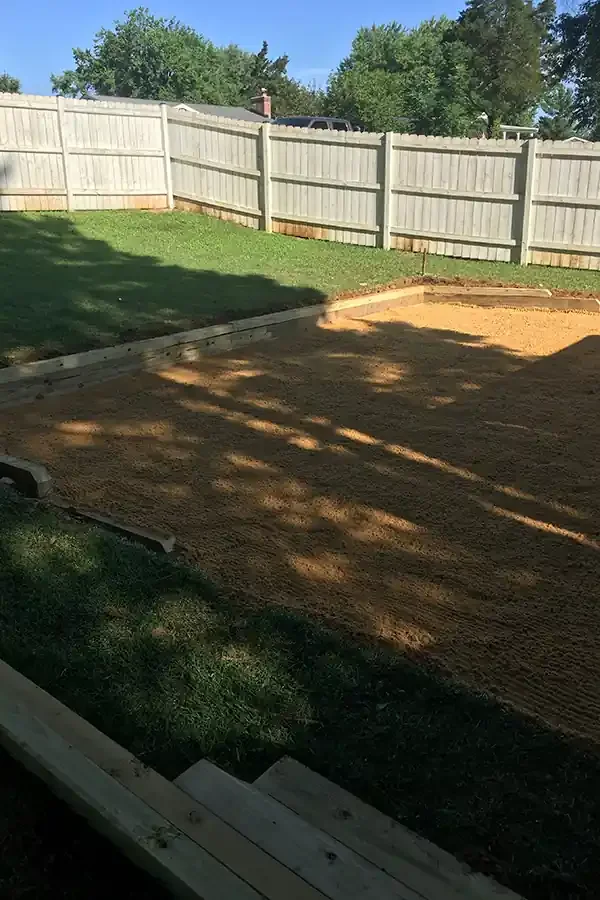
What changes the price of an excavation job?
The volume is the base. Cut, fill, and spoil each count, and so does anything that has to be hauled off or brought in. The calculator below turns your dimensions into cubic yards and truckloads.
Rock, wet soil, roots, and buried debris slow the machine down. Along the Fall Line, rock can show up in a corner of a lot and not in the rest. See the Augusta dirt guide.
A narrow gate, a steep drive, overhead lines, a septic field to avoid, or a neighbor's fence along the line all add time and sometimes a smaller machine.
Permits, inspections, erosion control, and the buffer along state waters take planning, and sometimes fees. The permit tool shows which office applies.
Clearing, stumps, fill dirt, stone, fabric, culvert pipe, seed, and sod are separate lines. A lump sum that hides them makes it hard to compare bids.
How many cubic yards and truckloads is your job?
A cubic yard is a cube three feet on each side. Most pads, trenches, and ponds are easier to describe in feet, and the truck hauls yards, so the conversion matters. Start with the numbers you have. We will check them on site.
For a trench, set length to the run, width to the trench width, and depth to the depth. For a pad, use the pad size and the depth you plan to cut or fill. Spoil placed on site still counts as moved dirt.
What should a free scope of work estimate include?
It should read like a short work order that you could hand to another contractor and get a comparable number. Ours lists:
- What is cleared, cut, filled, hauled, or brought in, with rough quantities.
- Which permits and inspections apply and who handles them.
- Who calls 811, and the plan for private lines.
- Erosion control, with silt fence, entrance, and seed or mulch listed.
- What is not included, such as rock removal, sod, or fill dirt, and what happens to the price if it shows up.
- When the work can start and what the weather does to that.
If a bid gives you one number and no scope, ask for the scope.
How do you compare bids without being misled?
Put the scopes next to each other first and the prices second. The cheap bid is often the one that left something out, and the something shows up later as a change order. The questions that sort bids quickly are who hauls the dirt and where, who is responsible for permits, and what the contractor does if the ground turns out to be wet or rocky.
A contractor should be willing to show you proof of insurance and a finished job like yours. If they cannot, that tells you something. Reviews on a map listing show how past customers felt, and they are worth reading alongside the scope.
How we price a job
You send the address
Tell us what you want done, the size, and when. A few photos help, but they do not replace a walk.
We walk the lot
We look at slope, access, soil, trees, and water, and we mark the work with you.
We check the rules
We find out which office covers your parcel and what it requires.
You get the scope
A written estimate listing the work, the haul, the permits, and what is not included.