What goes into trenching for utility lines?
A good trench starts before the bucket touches the ground. We confirm what is already buried, dig to the depth and width the line needs, protect the walls, lay the pipe or conduit on a prepared bed, and backfill in layers so the ground does not sink later.
A trench is a hole with a long shape, and the long shape is the problem. It crosses everything between the source and the building: roots, old lines, the neighbor's sprinkler, a gravel drive. The whole job is knowing what is in that path before the machine moves.
If the trench is for a new house, it usually comes after the foundation dig. If water has to cross a driveway, see gravel driveways.
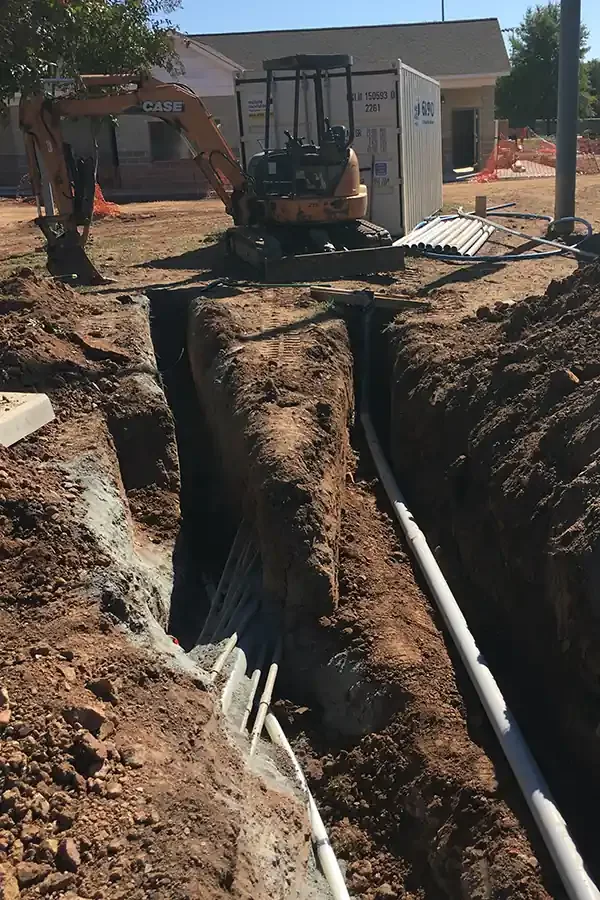
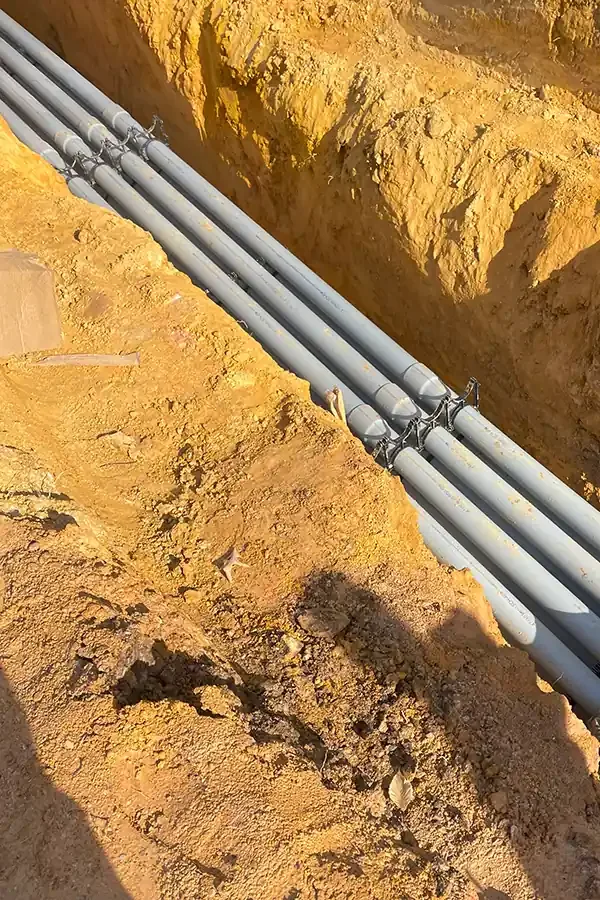
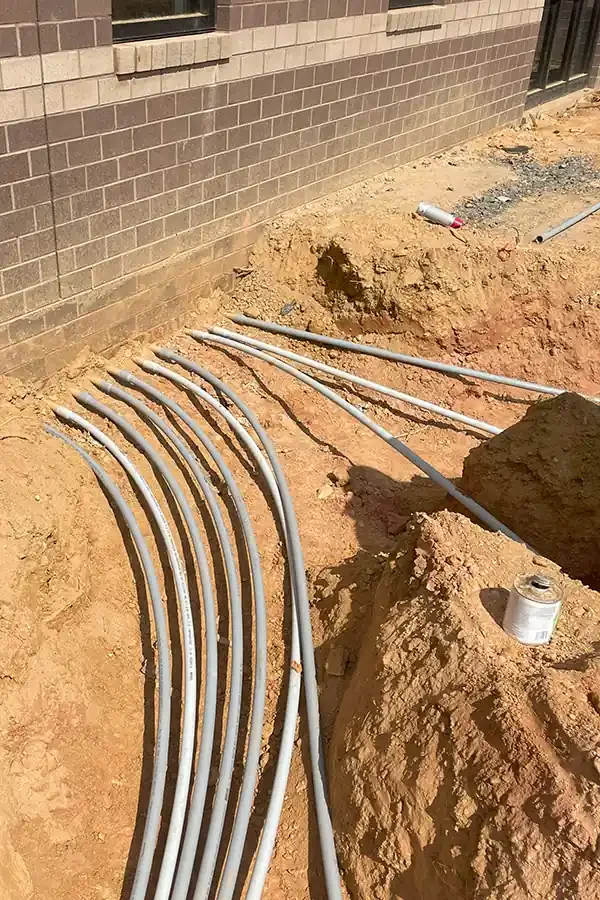
Which lines can go in a trench?
- Electrical conduit. To a shop, barn, pool equipment, or a well. Conduit goes in with bends and pull points planned, and the electrician pulls the wire.
- Water service lines. From the meter or the well to the building, at the depth the water provider requires.
- Drain and downspout pipe. To carry roof or yard water to a place that can take it.
- Irrigation. Main lines and zones for a lawn or garden.
- Communications conduit. For fiber, data, or low-voltage runs to outbuildings.
Gas lines are installed by the gas company or a licensed gas fitter. We dig the trench to their specification and backfill after their inspection.
How do we find what is already buried?
Georgia 811 sends professional locators from member utility companies to mark the approximate location of their lines. Approximate is the word the organization uses, so a marked line can sit a little off the paint. We treat the mark as a warning, not a drawing.
In practice that means three things. We call 811 at least two business days before digging. We hand-expose a marked line before the bucket gets close. And we ask you about private lines, because the utilities do not mark a sprinkler, a well wire, or a buried pipe to an outbuilding.
The color code is a national standard published by the American Public Works Association. Walk through it with the locate marks guide.
A flag or a paint line on your lot may be old. If a locate request was filed months ago, the marks are out of date. Call 811 again before any new dig.
How do we keep the trench safe?
Trench collapses are among the most dangerous things on a construction site, and OSHA regulates excavations under 29 CFR 1926 Subpart P. We follow it: someone who is trained to spot hazards inspects the trench, walls are sloped or supported to what the soil needs, and workers have a way out.
Piedmont clay stands up well in a narrow cut, which makes it seem safe. It can still crack and slab off after rain or vibration. We keep spoil back from the edge and look at the walls after any rain.
Coastal Plain sand does not hold a wall. A cut that looks fine can slump without warning, so we slope the sides or use a box.
Water in the bottom weakens walls and pushes up the floor. We plan where to pump and where the water goes before we dig, and we stop when it becomes a different job.
How is a trench backfilled so it does not sink?
A line is laid on a firm, smooth bed, with no rocks under it. We cover it with clean fill first, then backfill in layers, compacting each. A trench that is backfilled in one pass settles for years, and the line above it sinks. Under a driveway or slab, the same rule is stricter.
Where a trench crosses a lawn, we mound the fill a little for settling and put the topsoil on last. Where it crosses a drive, we compact in lifts and finish with stone.
The calculator on the cost page converts trench length, width, and depth into cubic yards, so you can see how much dirt a long run actually moves.
How a trenching job runs
Plan the route
We walk the path with you, pick the shortest safe line, and ask the owner of each utility what it requires.
811 and private lines
We call 811 and ask you about sprinklers, well wires, and old pipes.
Expose and dig
Marked lines are hand-exposed. We dig to depth and slope or support the walls.
Lay and inspect
The pipe or conduit is laid on a prepared bed, and the utility or the code inspector looks at it if required.
Backfill and restore
We backfill in layers, shape the ground, and leave the spoil tidy.