What goes into a gravel driveway that lasts?
A gravel driveway that lasts has three things under the stone: a firm, graded subgrade, a crown that sheds water to the sides, and a place for that water to go. Stone is the visible part. The shaping and the drainage are what keep it in place.
On Augusta's red clay, a drive built without them turns to ruts in the first wet winter. On sandy ground south of the Fall Line, the stone washes before it settles. We plan for the soil you actually have, and the dirt guide explains how the two differ.
If the drive is part of a new build, it usually follows lot grading and the foundation dig. If water crosses it, see trenching and utility lines for culverts and drains.
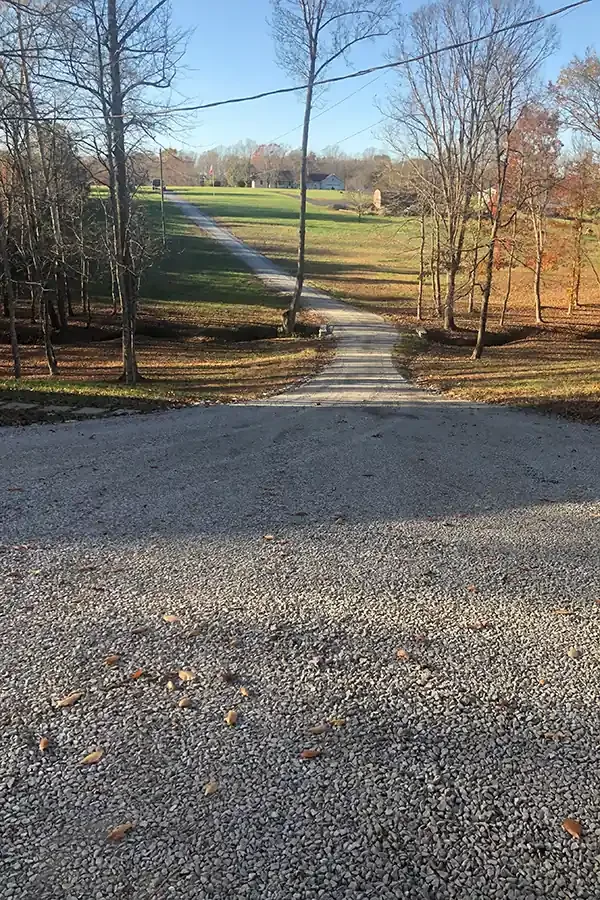
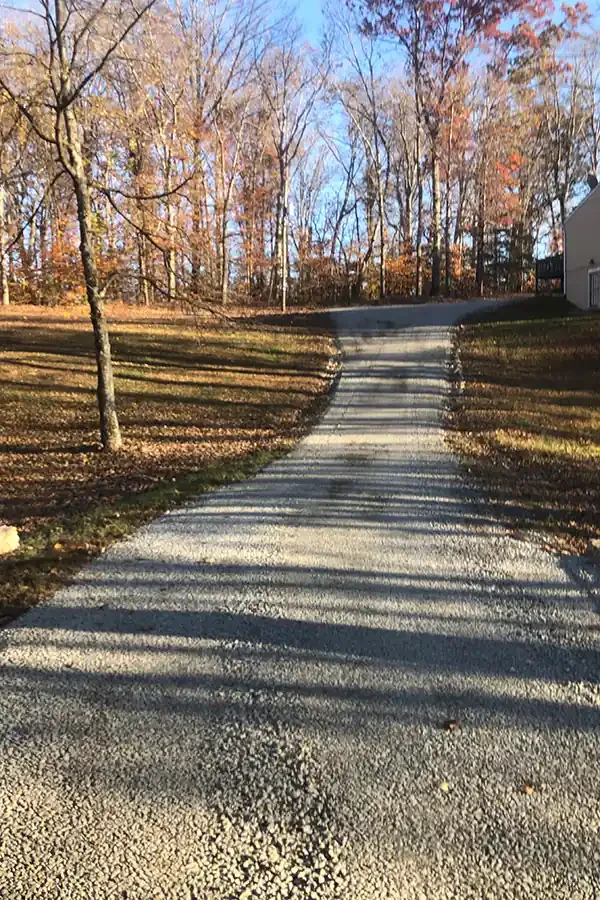
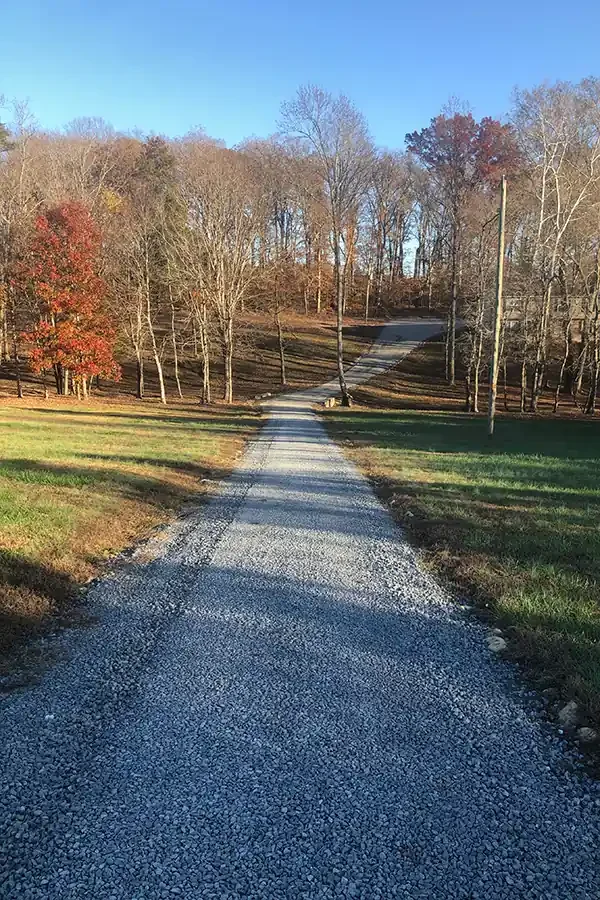
What is under the top layer of stone?
We strip topsoil and soft material, then grade the bottom to the crown and slope we have laid out. This is where a wet spot gets found. If the soil is soft, we dig it out and replace it.
On soft or clay-heavy ground, a geotextile fabric goes down so the stone cannot be pushed into the soil, and the soil cannot pump up into the stone. It costs little against what it saves.
A coarse crushed stone in compacted layers carries the weight and drains. This layer does most of the work, so its thickness depends on the soil and on whether delivery trucks and heavy vehicles will use the drive.
A finer crushed stone on top gives a smooth surface that locks together under traffic. It is the layer you replace as it wears.
We do not quote a depth without seeing the ground. A drive for a pickup is a different build than one for a loaded dump truck or a delivery truck.
Where does the water go when it rains?
This is the question that decides whether the driveway survives. We walk the route after rain if we can, and then lay out three things.
- Crown. The center is higher than the edges so water leaves to both sides.
- Ditches or swales. They carry that water along the drive and away from it.
- Cross drains and culverts. They let water pass under the drive without cutting across it.
Water leaving a driveway still has to go somewhere. We do not point it at a neighbor, a septic field, or a creek buffer, and Georgia's rules keep land disturbance 25 feet back from state waters. When a drive crosses a creek or a wet area, the pipe size and the permit come first, and we call the right office before the pipe is bought.
What changes on a hill or a long run?
Hillside drives are common north and west of the Fall Line, where the ground is rolling. Water moves fast on a slope, so a long straight run of stone can become a stream bed in one storm. We break the run with turnouts, shed water at set points, and sometimes bend the route to cut the grade.
If a slope is too steep for loose stone to hold, we say so and talk through alternatives. We would rather tell you that now than rebuild the drive after the first hard rain.
Grading and driveway work that disturbs soil can need erosion controls and, in Augusta, a grading permit. We check before we dig.
What does a gravel driveway need after it is built?
Very little, and a little goes a long way. After a few months, check the crown and the ditches. Rake stone back from the edges to the center when it spreads. Clear the culvert ends when leaves and silt build up. Every few years, a new layer of surface stone and a pass with a grader restore the shape.
If you let ruts form and stay, water collects in them and the next rain deepens them. A repair in the first month is a morning. A repair in the second year is a rebuild.
How a driveway job runs
Walk the route
We walk the route after rain if we can, mark the path, and note slopes, trees, and where the water goes.
Checks and 811
We confirm whether any permit applies where the drive meets the road, and we call 811.
Cut and shape
Topsoil and soft spots come out, and we shape the subgrade, ditches, and crown.
Fabric and base
Fabric goes down where the soil needs it, then base stone in compacted layers.
Surface and cover
Surface stone goes on, ditches are seeded, and we walk the drive with you in the rain if you want to see it work.