What is lot grading, and why does Augusta need it done right?
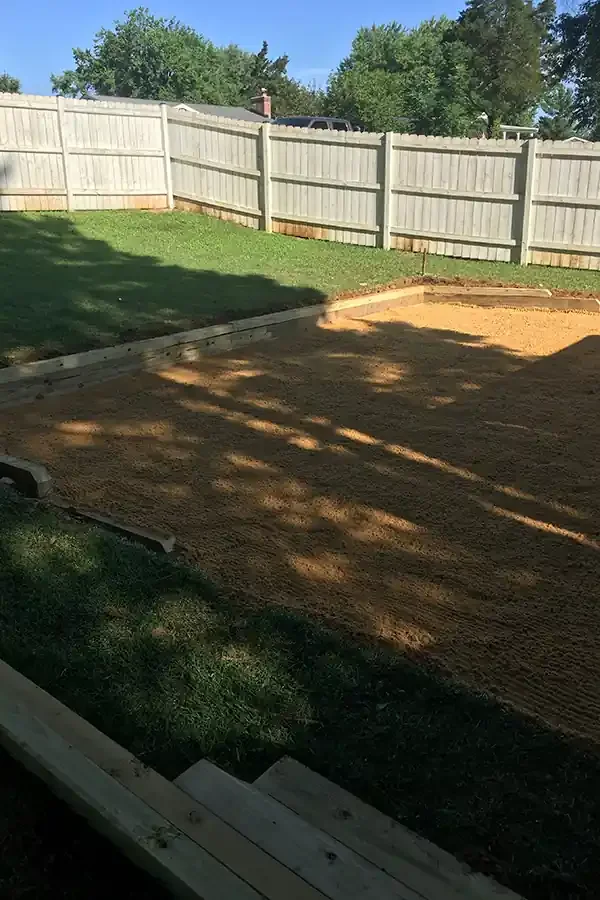
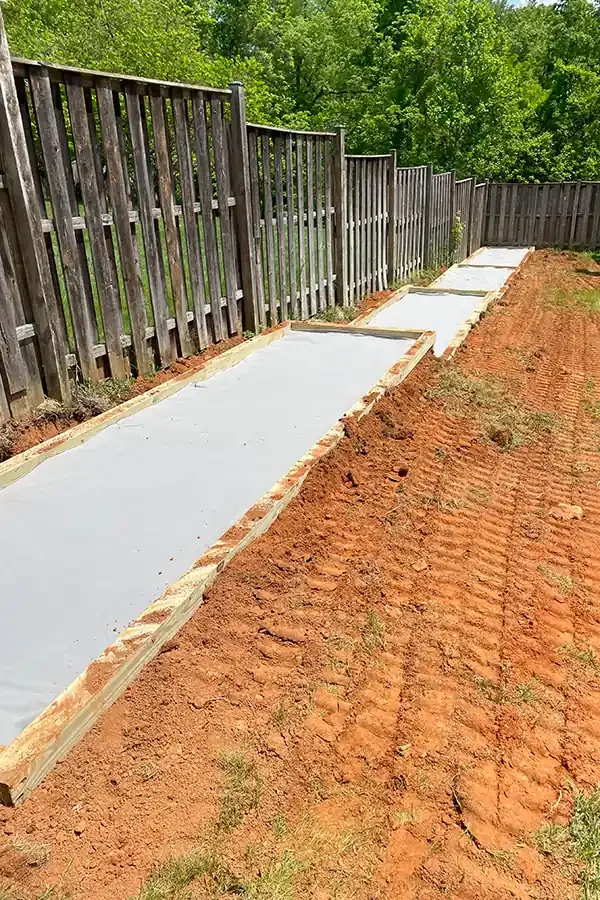
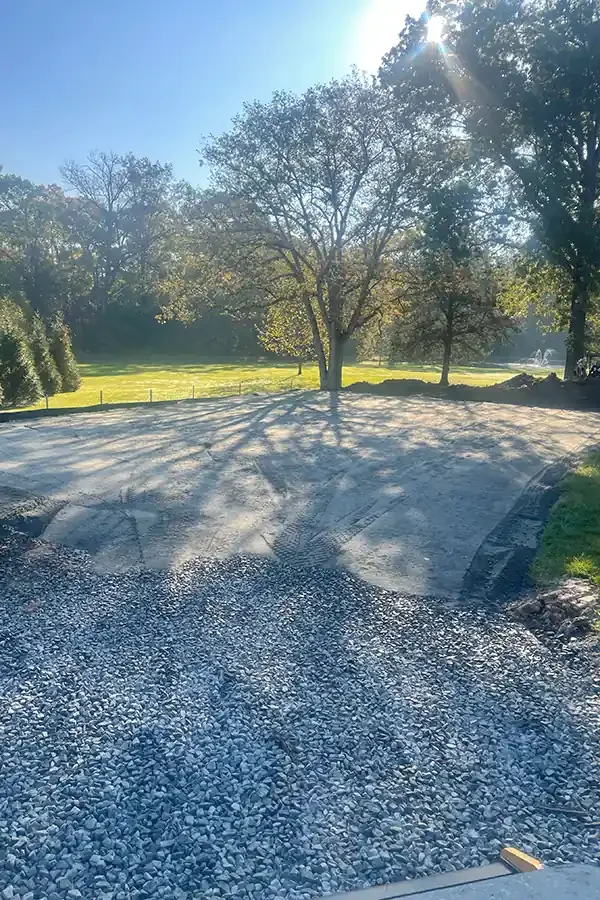
Lot grading shapes the surface of a property so water drains away from buildings and off the lot without cutting gullies. On an Augusta lot that usually means clearing, rough grading to the plan, adding or removing soil, and finishing the surface with erosion control in place.
Done well, grading is invisible. Water leaves the lot, the pad stays dry, and the slope holds grass. Done badly it shows up in a wet crawl space, a washed-out driveway, or a neighbor at the property line. We start with where the water goes now, and design the finished grade from that.
If trees are still standing, see land clearing first. If a house is going up, the dig for it is on the foundation excavation page.
How do we decide where the water goes?
We stand on the lot after a rain if we can. Where water collects, where it runs, and where it leaves tells us more than a survey does. Then we look at the plan, the neighbors' grade, and any ditch or pipe the lot already has.
- Away from the building. The finished grade falls away from the house or pad on every side.
- Around, not across. Roof and driveway runoff is steered around septic fields, wells, and low spots.
- To a place that can take it. A road ditch, a swale, a creek buffer, or a pipe to daylight, never onto a neighbor.
- Slow enough to hold. A steep fall in red clay cuts a channel, so long slopes get benches or check points.
What erosion control does Georgia require when we grade?
Georgia treats grading as land-disturbing activity, and the state's field manual for erosion and sediment control is what local inspectors measure against. Controls are in place before the soil is disturbed, they are inspected, and they stay until the ground has cover.
Set along the contour on the downhill side, with the ends turned uphill so water cannot flow around them. It is not placed across a channel where water concentrates, because that is a different structure. The manual calls for sediment to be removed once it builds up against the fence.
No land disturbance within 25 feet of state waters, measured from where normal stream flow has wrested vegetation. A variance can come from the state. We stake the buffer and leave it alone.
Bare soil gets seed and mulch or straw. A lot left bare through the wet season loses topsoil, and the state sends inspectors for exactly that.
Piedmont red clay is the reason. The New Georgia Encyclopedia describes it as highly erodible once its vegetation cover is removed, which is why the controls come first.
How do cut and fill work on a sloped lot?
Most sloped lots are a balance. Soil cut from the high side fills the low side, and the volume that leaves the lot or arrives from outside is what drives cost. We estimate both before we start. The calculator on the cost page shows how a few feet of depth over a pad turns into truckloads.
Fill is placed in thin lifts and compacted, not dumped and graded. A pad built in one tall pile settles, and a driveway or slab over it cracks. Clean fill, proper lifts, and moisture in the right range matter more than how fast the machine moves.
South of the Fall Line the soil is sandy, so it compacts differently and can wash faster in a storm. The Augusta dirt guide explains what to expect on each side.
What does Augusta require for a grading permit?
Under Augusta's ordinance, the Planning and Development Department, at 535 Telfair Street, Suite 300, (706) 821-1796, issues the grading permit, and each site needs its own. The ordinance text we have is from 2011, so we confirm current rules with the office.
| Single-family home | An individual plot plan goes to License and Inspections before a building permit or certificate of occupancy. |
|---|---|
| Lot in an approved subdivision | A permit number is issued by phone or in person, with lot and block, street address, owner, contractor, and dates. |
| Other ground | A grading plan, drawn to scale, with 2-foot contours and a registered engineer's seal. |
| Commercial development | A site plan plus a grading plan unless exempt. |
| Over 1.1 acres | A soil erosion and sediment control plan. |
A placard is issued free after site plan approval and must be displayed before work begins. In Columbia County the office is the Stormwater Compliance Department in Evans, (706) 447-7645. Use the permit tool for a quick sort.
How a grading job runs
Walk the water
We look at how water moves across your lot, then agree on the finished grade with you.
Permit and 811
We confirm the permit office, pull the grading permit if one applies, and call 811 so utilities are marked.
Sediment controls
Silt fence, a stabilized entrance, and buffer stakes go in before the first cut.
Cut, fill, shape
Rough grade to the stakes, compact the fill in lifts, then finish the surface.
Cover and walk
We seed and mulch, walk the lot with you, and leave water running where we agreed it should.