What is forestry mulching, and when is it better than land clearing?
Forestry mulching grinds trees, brush, and vines into mulch where they stand, so the lot is cleared in one pass with nothing to haul or burn. It is the right call when the land will stay open or wooded, and the wrong one when a pad, drive, or pond needs the roots out.
Bush hogging, lot clearing, and brush removal around Augusta are often the same question asked three ways: how thick is the growth, and what happens on the ground afterward? We start with that, then match the machine to the lot.
If the plan is a building site, read land clearing in Augusta first. It covers stumps, buffers, and how we handle trees we take out completely.
Bush hog, mulcher, or full clearing: which fits my lot?
A rotary cutter pulled behind a tractor. It handles pasture, fence lines, overgrown fields, and saplings. It does not deal with trees of any real size, and it leaves stems that grow back.
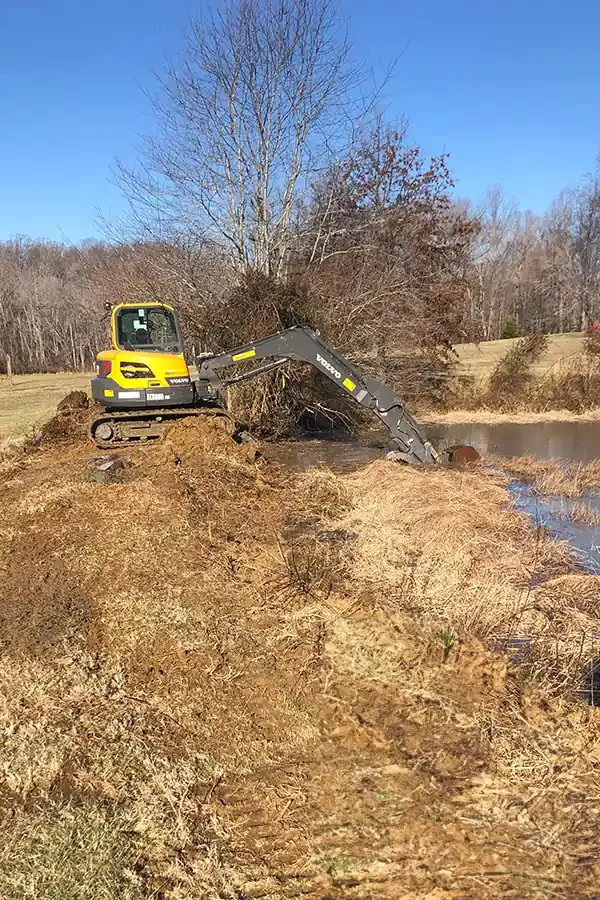
A drum or disc head on a skid steer or excavator. It takes standing brush and trees down to mulch in place, and it can work on slopes and between trees you want to keep.
Trees cut, stumps and roots pulled, brush piled or hauled, and bare ground left ready to grade. This is what a building site needs.
The question that sorts them is what goes on the ground next. Pasture, a trail, a hunting plot, or a view lot can stay mulched. A house, a shop, a gravel drive, or a pond needs the roots gone, and that moves it toward lot grading and site preparation.
How does Augusta ground change a mulching job?
North and west of the Fall Line the soil is Piedmont red clay. The New Georgia Encyclopedia describes it as highly erodible once its cover is removed, which is why a layer of mulch left in place is a real benefit on a slope. South of the line the ground is sandier, drains faster, and holds a machine differently.
Wet clay is the enemy of any tracked or wheeled machine. We would rather wait a week than rut your lot. The Augusta dirt guide explains how the two kinds of ground behave.
What will forestry mulching not do?
- Level a pad. Roots stay in the ground. Anything that has to be graded or compacted needs them removed first.
- Replace a stump pull. Mulched stumps rot slowly. If you want them gone, see stump grinding.
- Skip the rules. Buffers, erosion control, and permits apply the same way. See the permit guide.
- Dig a pond or trench. Those start after clearing. See pond digging and trenching.
What does the lot look like afterward?
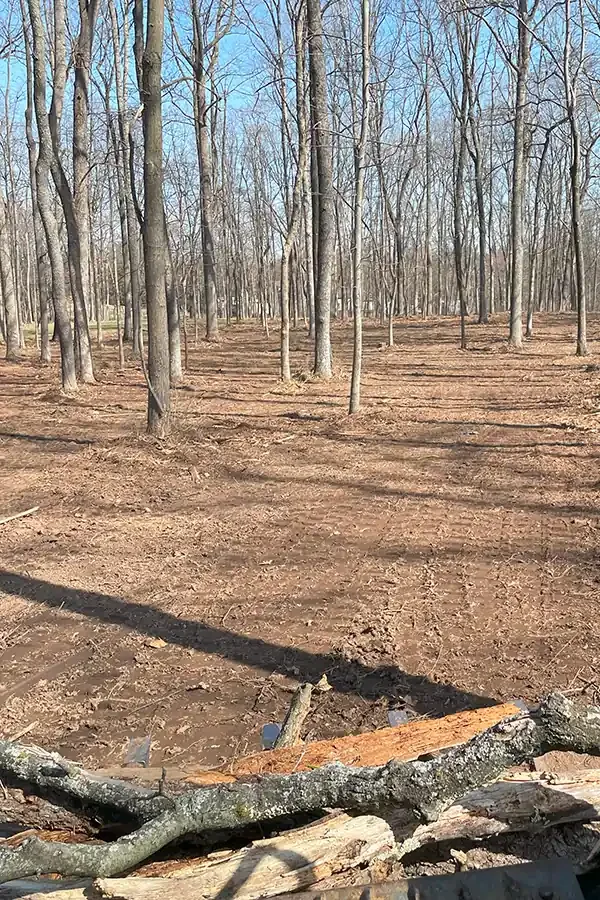
A mulched lot has a brown, chipped surface instead of bare dirt. Trees you marked to keep are still standing, and the cut stays clear of property lines and buffers we staked beforehand. If grass is the goal, we spread or rake the mulch to a depth that will not smother seed.
If a graded surface is next, the same crew can move straight into grading or a gravel driveway without a second contractor and a second mobilization.
How a mulching job runs
Walk and mark
We walk the lot with you, mark the trees to keep, and stake property lines and any stream buffer.
Check the rules
We confirm the permit office and whether the work counts as land disturbance.
Call 811
We place the locate request before a machine goes near a marked line.
Mulch
The head goes through the growth in passes, working around what you want left standing.
Finish and walk
We spread the mulch where needed, check the edges, and walk the lot with you.